
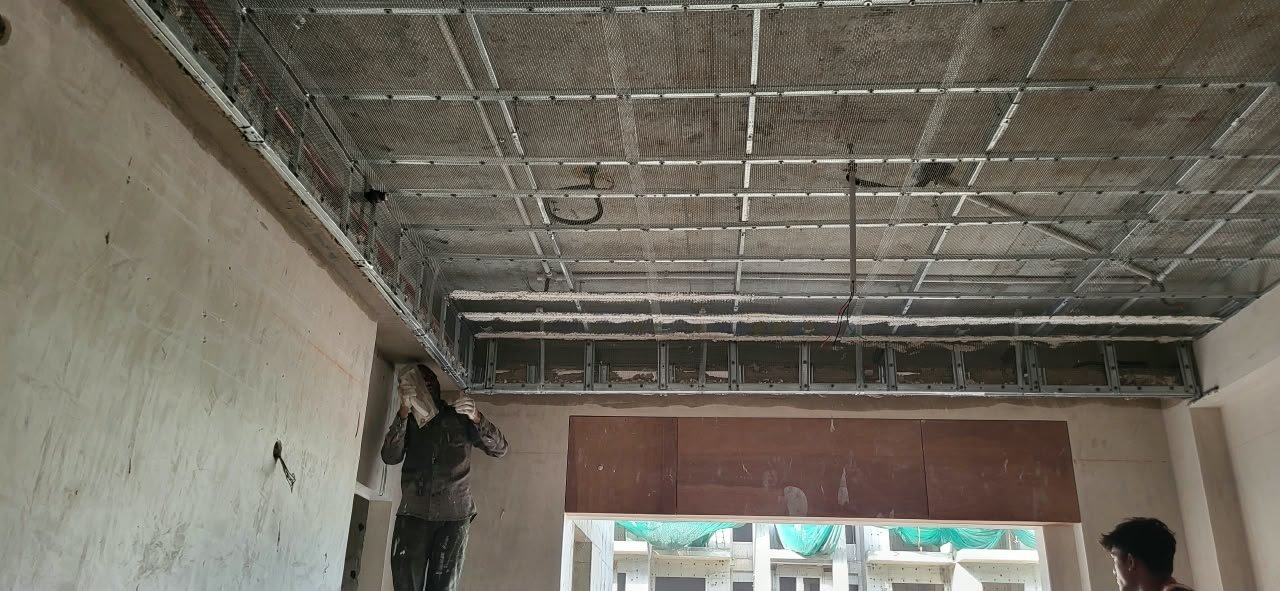
A ceiling sets the light in a room. We build gypsum and POP false ceilings, grid systems, wooden ceilings and decorative panels, with cove lighting and spot lights planned into the design, not added as an afterthought.
Wiring and services are concealed in the ceiling void, and acoustic options are available where sound control matters. The aim is a flat, clean ceiling with the lighting you actually need, and no visible patches or uneven lines.
Ceiling types
- Gypsum board ceilings. Flat or stepped ceilings with clean lines and a smooth finish. Boards are fast to install and suit modern designs.
- POP ceilings. Plaster of Paris allows moulded and curved details, cornices and traditional patterns.
- Grid ceilings. Tile-and-grid systems used in offices and shops, easy to open for access to services.
- Wooden ceilings. Slatted or panelled timber ceilings for warmth in living rooms, lobbies and corridors.
- Acoustic ceilings. Perforated or fibre panels where echo needs to be reduced, such as offices, studios and meeting rooms.
Lighting is part of the design
- Cove lighting hides LED strips in a recess so light washes across the ceiling.
- Spot and recessed lights give task and general light.
- Profile and linear lights create clean lines in modern interiors.
- Decorative pendants and chandeliers need reinforced fixing points, which we plan before the ceiling closes.
We plan light positions, drivers, wiring and switch zones with you, so you can dim a living room or switch off the cove separately from the spots.
Planning before we build
Ceiling height, beams, ACs, ducts, curtain rails and fan positions decide what is possible. We measure all of these during the site visit and prepare a ceiling plan showing levels, steps, light positions and AC placement. A false ceiling takes some height, more for stepped and cove designs, so rooms with low ceilings need a lighter design.
How we work
- Survey the room and agree the design and lighting plan.
- Mark levels and install the framework and hangers.
- Run wiring, fix lights and make provision for AC and fans.
- Fix boards or panels, finish joints, and prepare for paint.
- Test all lights and hand over a clean, ready-to-paint ceiling.
Care and finishing
Use moisture-resistant boards in bathrooms and kitchens, and ensure leaks from above are fixed before a ceiling is closed. Painting is best done after the ceiling and wall work are complete and before woodwork is fitted. For a complete scheme, see interior design.
Where we do this
We build ceilings in homes, offices and shops across Badarpur, Jamia Nagar, South Delhi, Noida, Gurugram and Faridabad. Examples include a living room with cove lighting and a timber-slat ceiling in a residence.
From our sites
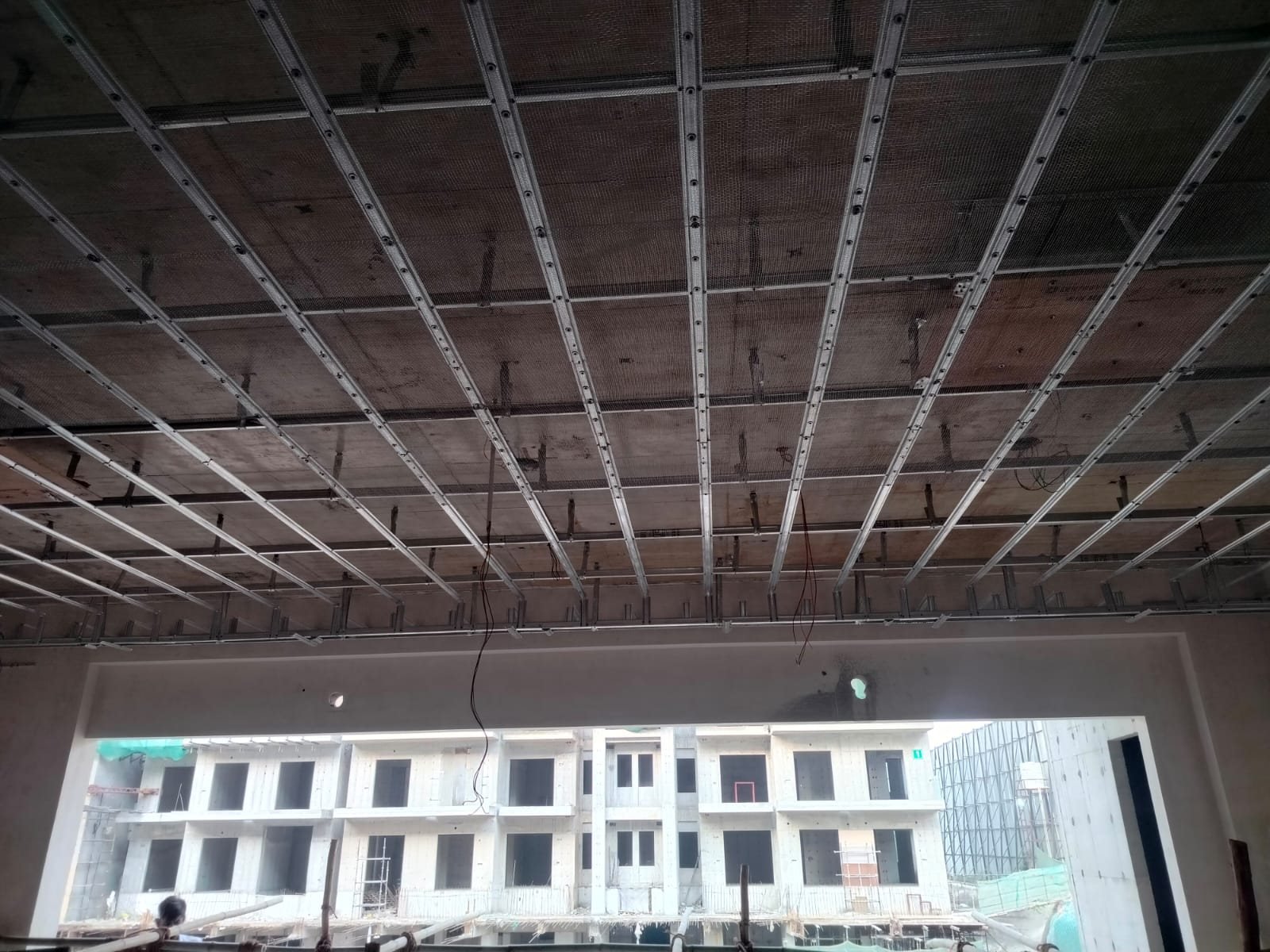
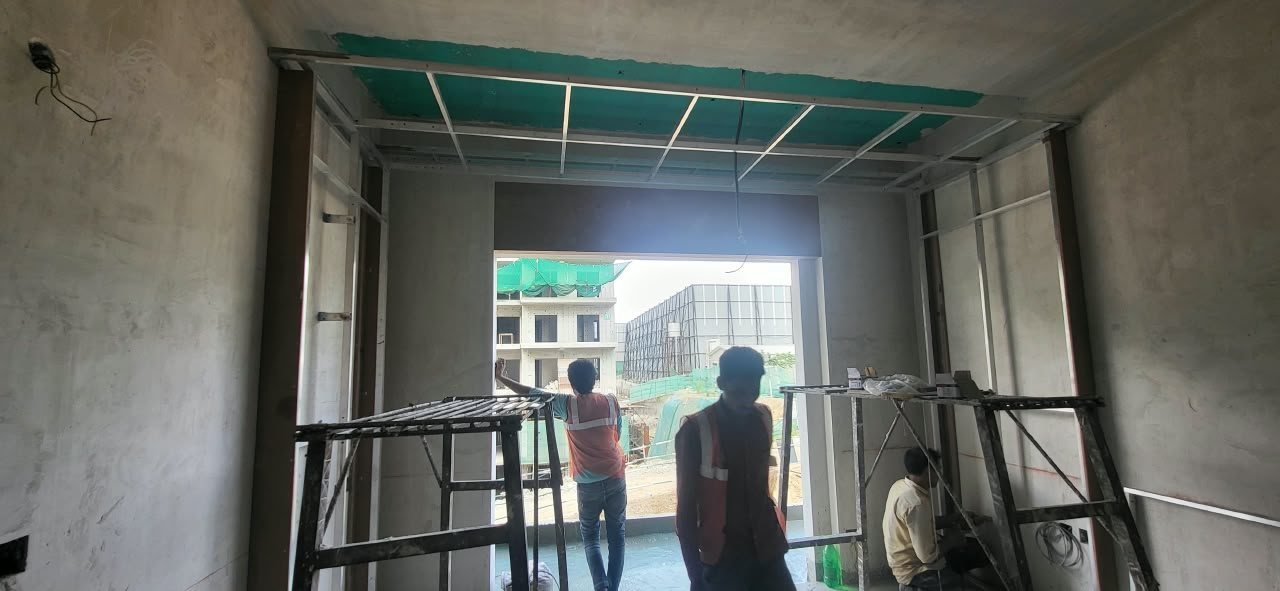
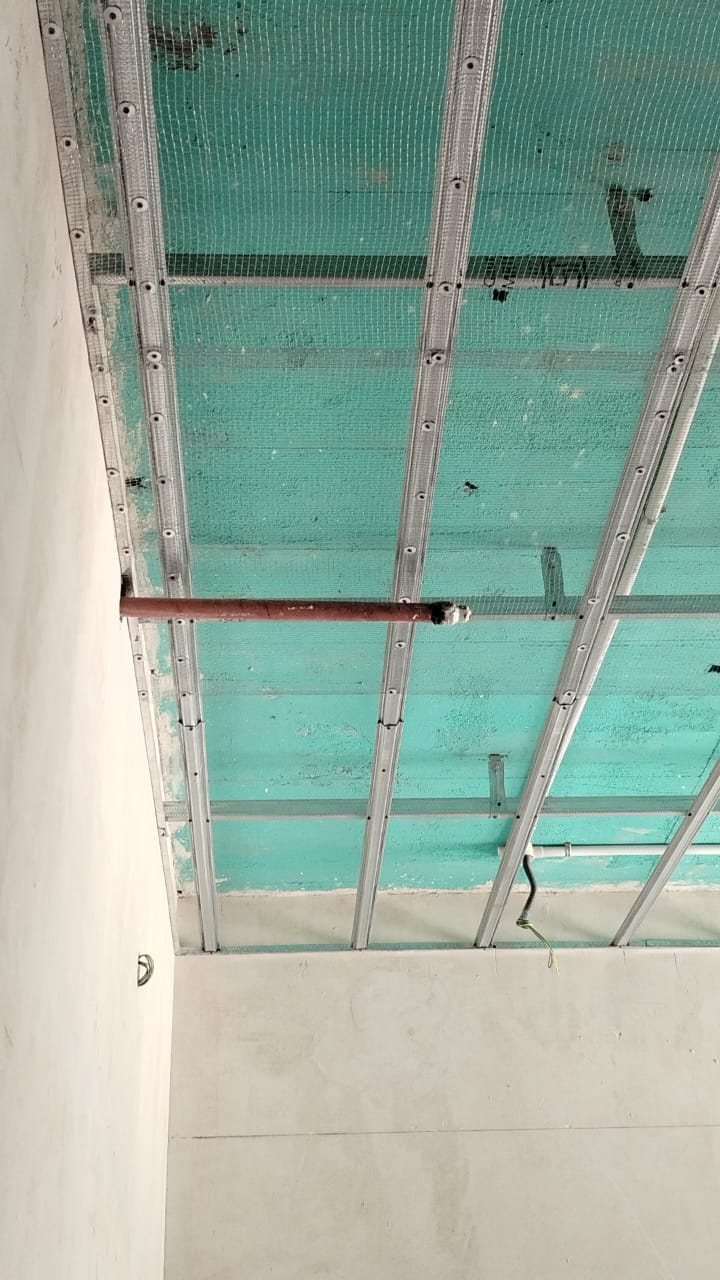
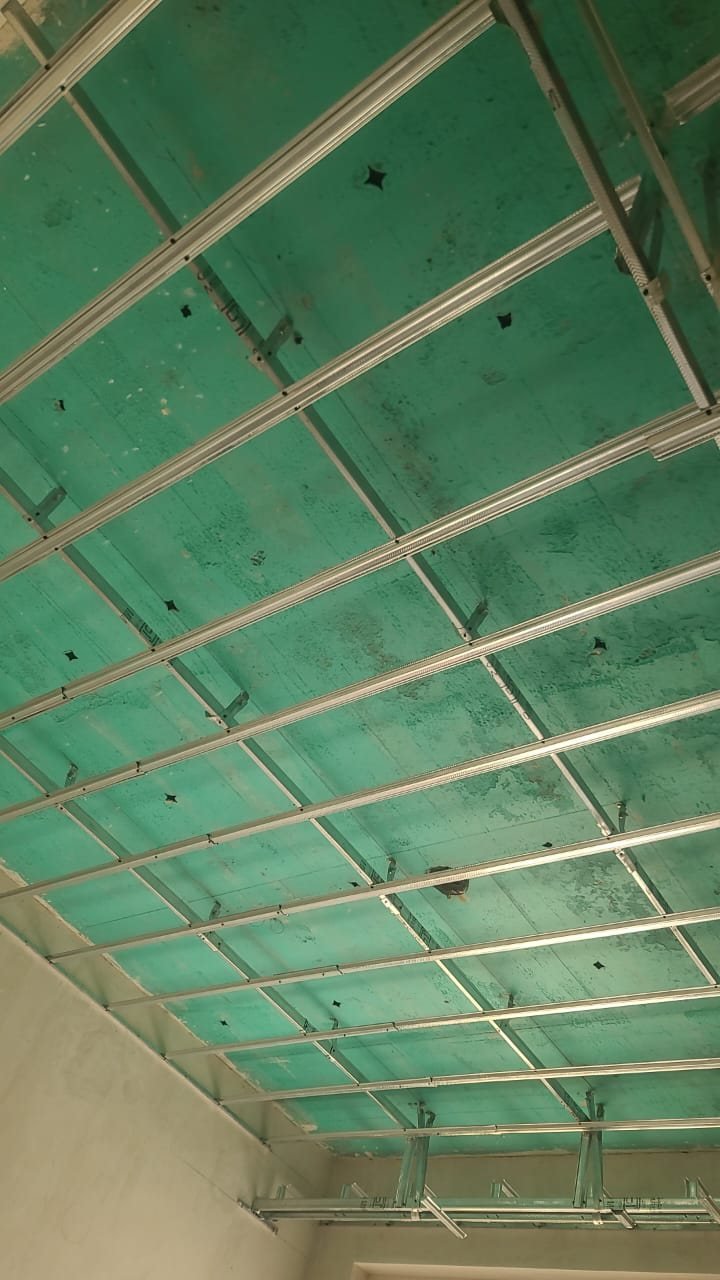
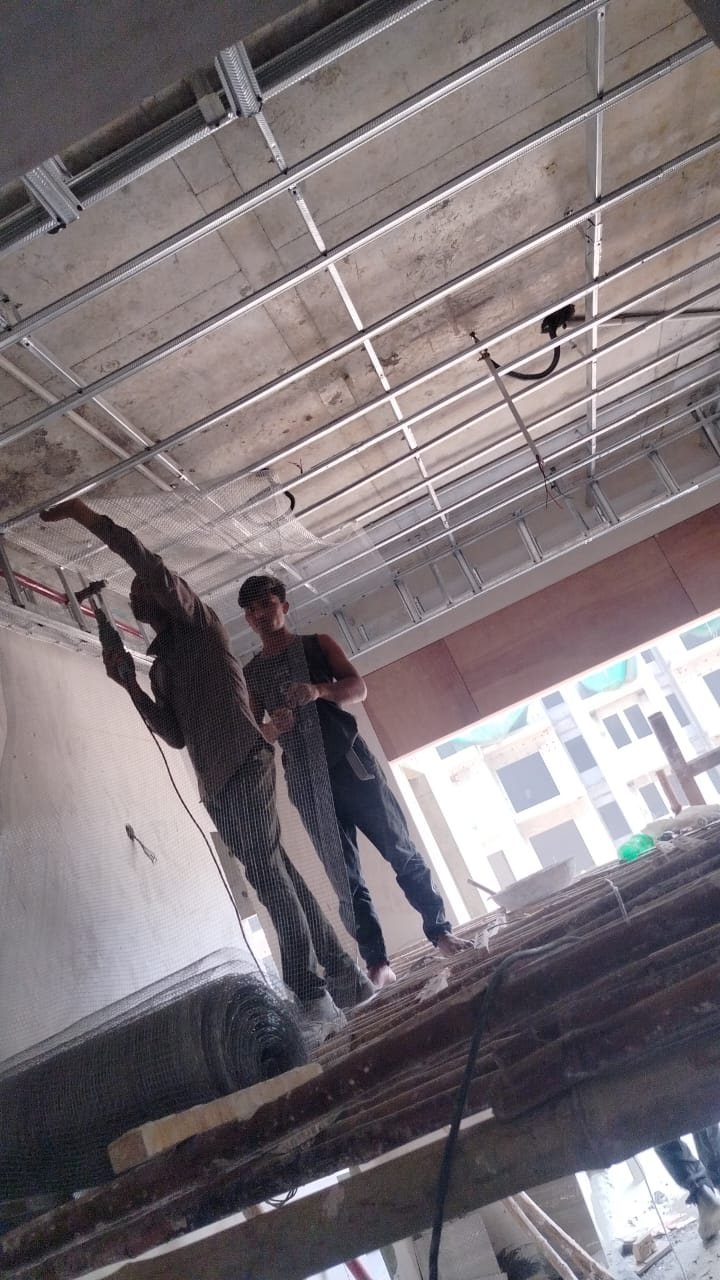
See all false ceiling, board framing and lighting photos in the site gallery
Questions
Gypsum or POP, which is better?
Gypsum boards are faster to install and give clean flat surfaces. POP allows more moulded detail. We suggest one based on your design and budget.
Can you add cove lights to an existing ceiling?
In many cases yes, after we check the ceiling height and wiring.
How much height does a false ceiling take?
It depends on the design and services above. We measure the room and show the finished height on the ceiling plan before work starts.
Can I use a false ceiling in a bathroom or kitchen?
Yes, with moisture-resistant boards and proper ventilation. We advise on the right board for each room.
Will lights be on separate switches?
Yes. We plan lighting zones so cove, spots and decorative lights can be controlled separately.
Can you fix a chandelier on a false ceiling?
Yes. We provide a reinforced fixing point linked to the structural slab before the ceiling is closed.